
Doors 48
This week I have pulled out some pictures I took back in July with Thursday Doors in mind. They are of a very popular pub in the centre of Bristol, the Llandoger Trow in King Street, diagonally opposite the very recently refurbished Theatre Royal.
The Llandoger Trow gets its name from a small village in South Wales, Llandogo, and a trow, which is a flat-bottomed sailing boat that could lower its mast for navigating under bridges. It was named by a former owner of the pub, Captain Hawkins, who lived in Llandogo.
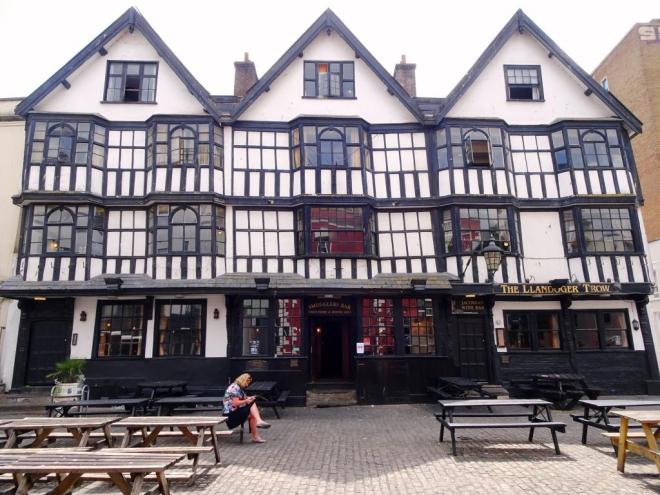
The building dates from 1664 but it was damaged during the war, like so many buildings in Bristol, and originally had five gable fronted sections – it had been a row of houses. In the middle, the pub has an 18th century shop front, but the doors although they look old are in fact 20th century, the door frames much older.

I love the way that around old buildings grow great stories, some of which might be based on some kind of truth, but many are part of our urban mythology. One story says that the pub was the inspiration behind Robert Louis Stevenson’s Admiral Benbow in Treasure Island, another story is that Daniel Defoe met Alexander Selkirk, his inspiration for Robinson Crusoe here.

No self-respecting old building is complete without a ghost and the Llandoger Trow boasts some fifteen of them! Can’t say I’ve ever seen one, although I have seen some rather deathly looking characters emerge at closing time.

And round the side is a rather ordinary door and this ‘upside down’ window.

And that’s it for this week.
by Scooj
More fabulous doors at: Thursday Doors – Norm 2.0
 Natural adventures