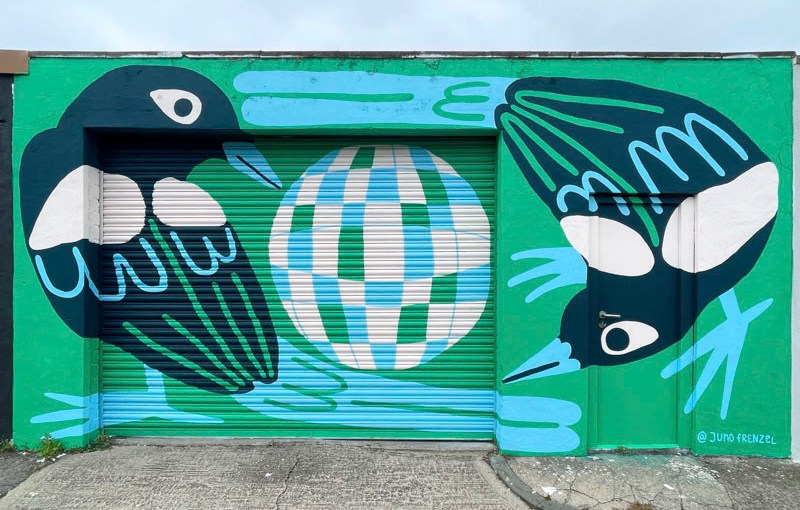
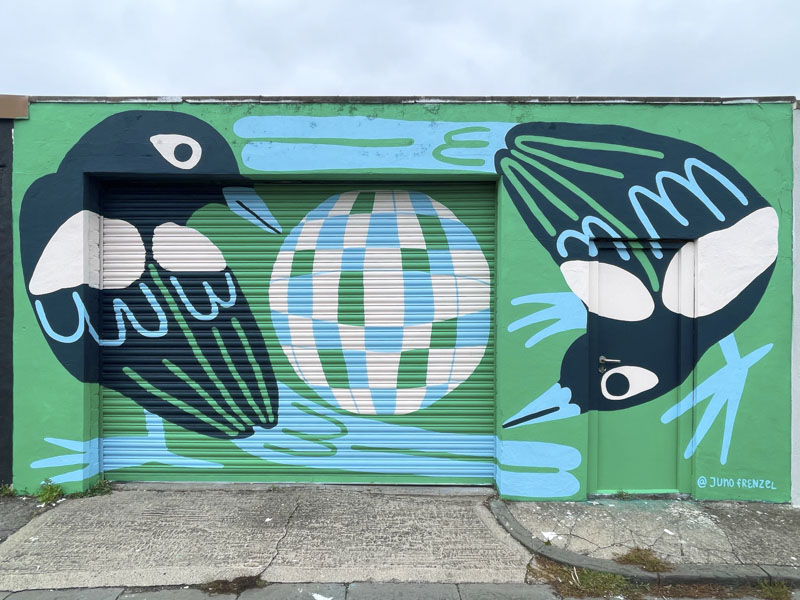
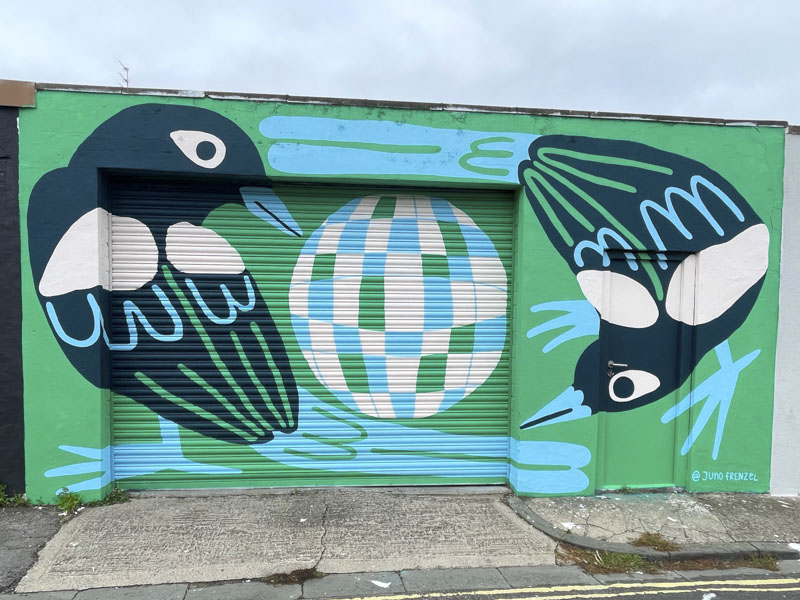
What a wonderfully striking piece this is, painted by Juno Frenzel, an artist I am not familiar with, but who has joined in with the Bristol Mural Collective Lucky Lane paint jam.
Juno Frenzel, Lucky Lane, Bristol, October 2026
The two magpies, beautifully presented, are looking pretty curiously at what looks like a little glitter ball. Juno Frenzel has managed to capture the character of the magpies perfectly, and the piece is skilfully painted, given the different surfaces and textures of the spot. Don’t be surprised to see this piece appear in Thursday Doors sometime in the future. Lovely work.
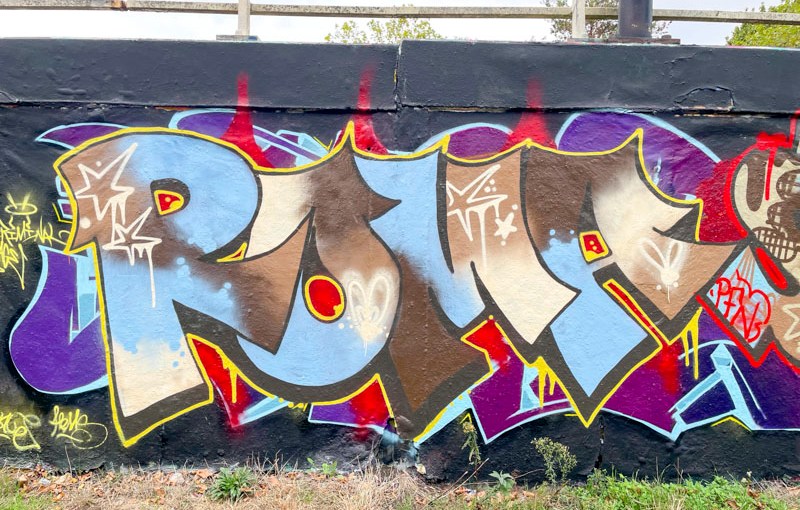
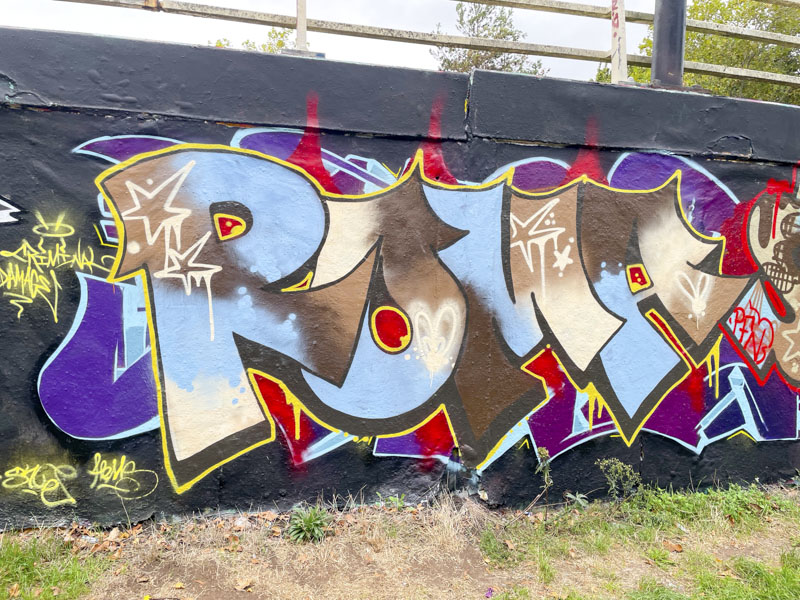
I’ve got to hand it to Roma, if ever the maxim ‘practice makes perfect’ applied to a graffiti writer, it would apply to her. She has been busy all year and along with getting out there, she has been making improvements and painting some nice pieces.
Roma, M32 roundabout, Bristol, October 2026
There is a particular characteristic that I love about her letters and that is the design of her ‘O’with its flat top and she sticks to this shape in pretty much all of her pieces. A nicely blended colour palette of cream, brown and blue is augmented with some stars and hearts. A great piece of graffiti writing from Roma.
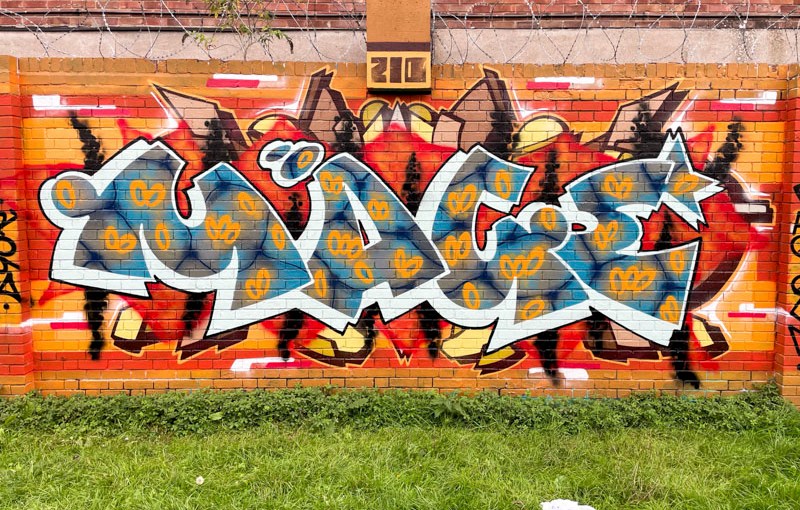
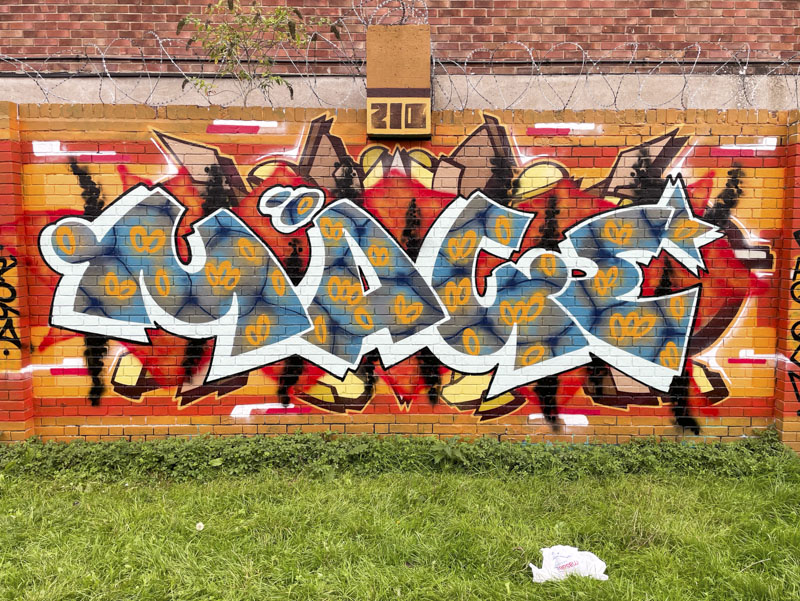
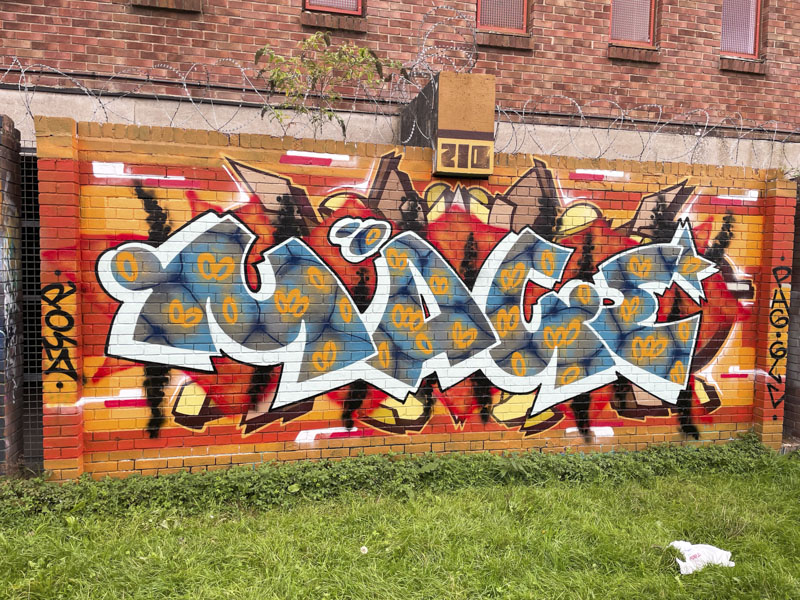
In using contrasting colours to the orange painted wall, Mage has managed to make his letters stand out on this wall formerly occupied by 210. It has to be said that Mage is painting like a man possessed, and not only in the quantity of pieces he is turning out, but also in their quality and creativity.
Mage, Peel Street Green, Bristol, October 2026
Mage is a graffiti writer completely at ease with his letter shapes, which remain reasonably consistent from piece to piece. It is the fills where his creativity comes in to play, and here he has painted a dazzling fill design with blended colours and soft lines, looking like a pile of boulders. The orange patterns add to the appearance, although it would have probably looked just as good without them. A seriously great piece of writing.
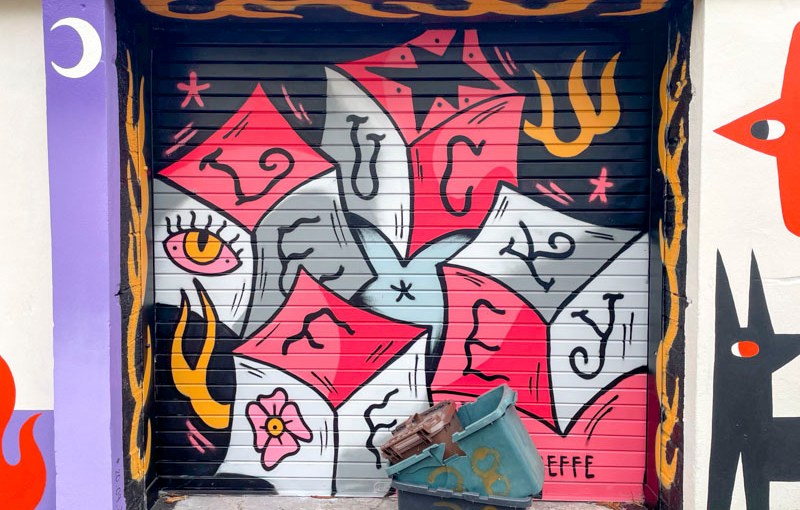
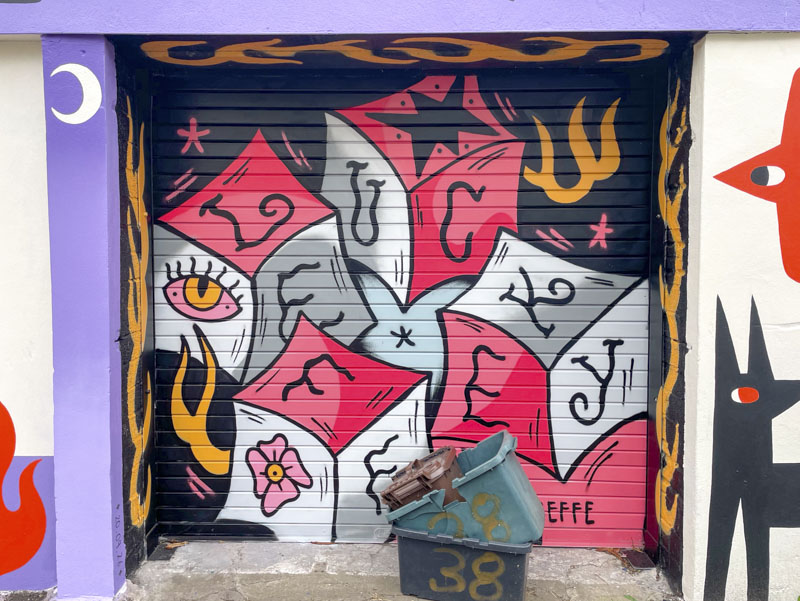
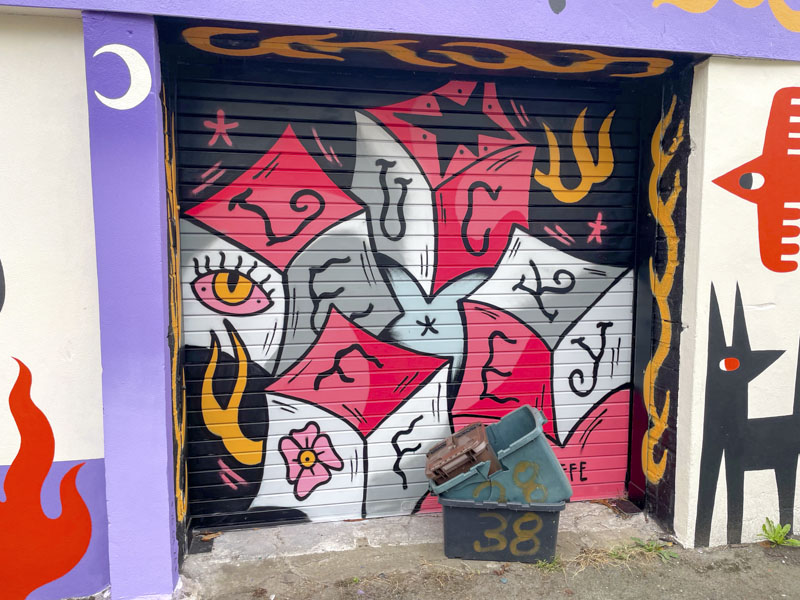
I am off to London today to watch the Premier League champions, Arsenal, play Everton, and so had to write today’s posts last night. This is a wonderful piece by Effe at the Bristol Mural Collective Lucky Lane paint jam in September.
Effe, Lucky Lane, Bristol, October 2026
Effe has painted some colourful cubes, like children’s letter blocks and the letters exposed spell out ‘lucky Effe’. The piece is painted on a recessed shutter and Effe has decorated the recessed walls as well as the shutter, which is a great creative addition to the piece. This paint jam seems to have been a huge success with some really nice and refreshingly unusual pieces.
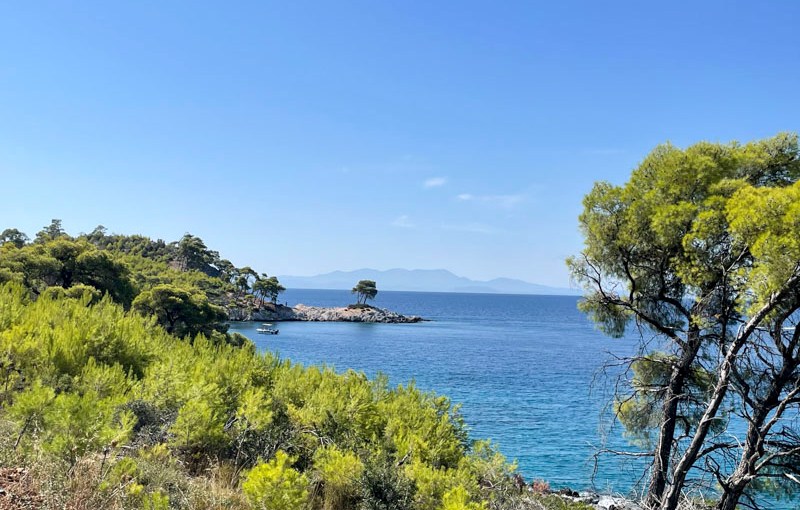
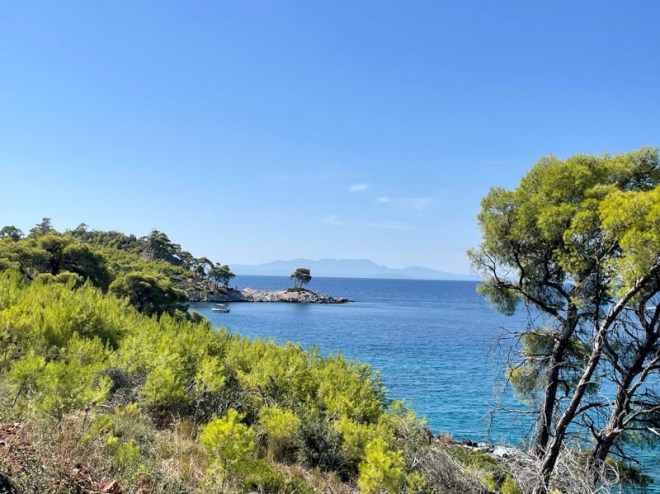
Cape Amarandos, Agnontas, Skopelos, Greece, September 2026
.
Fading memory
blue skies on Aegean Sea
sing Our Last Summer
.
by Scooj
Those of you familiar with the film Mamma Mia might recognise the clump of trees on this promentary where Colin Firth, Pierce Brosnan, Stellan Skarsgard and Amanda Seyfried sang Our Last Summer.
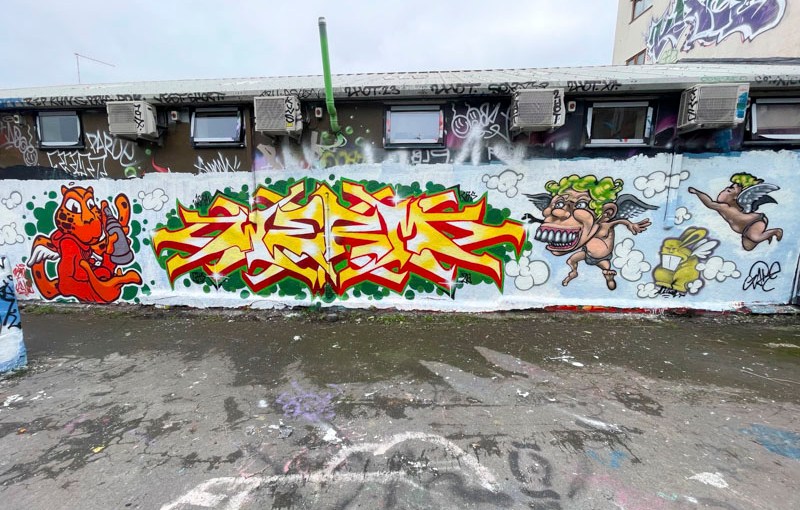
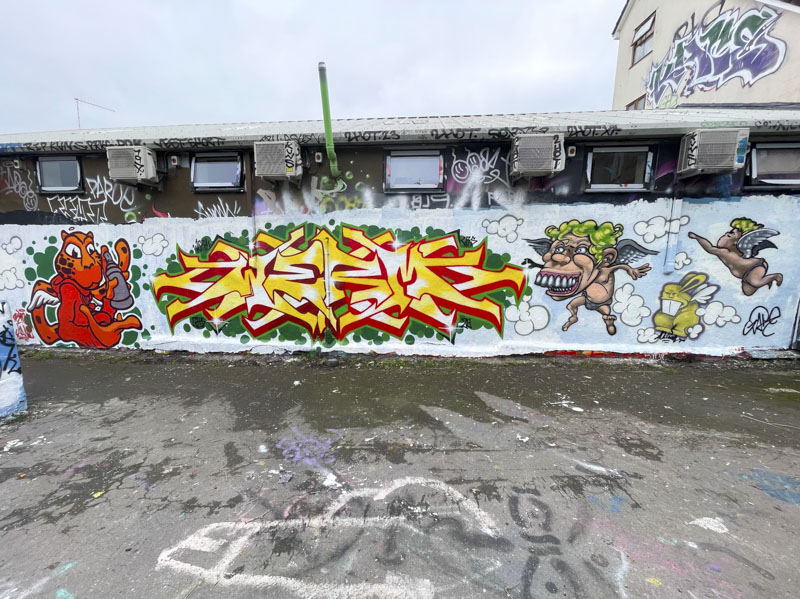
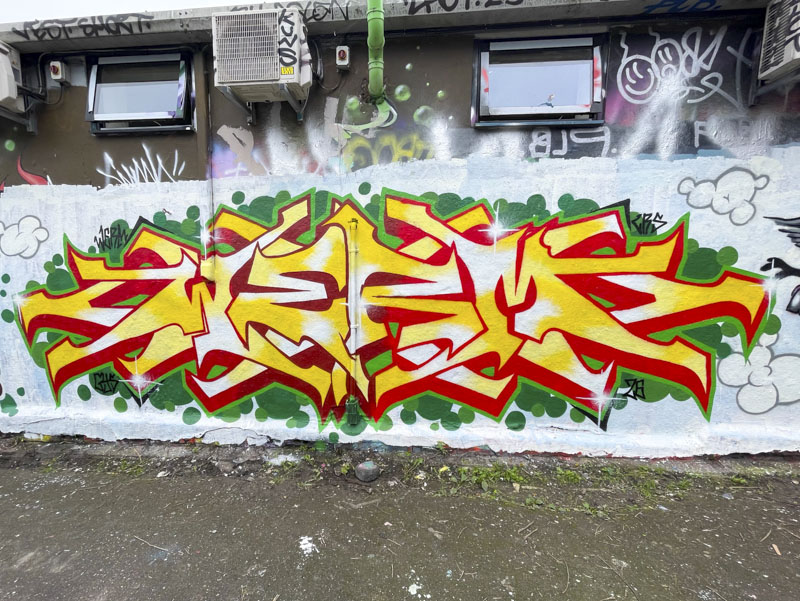
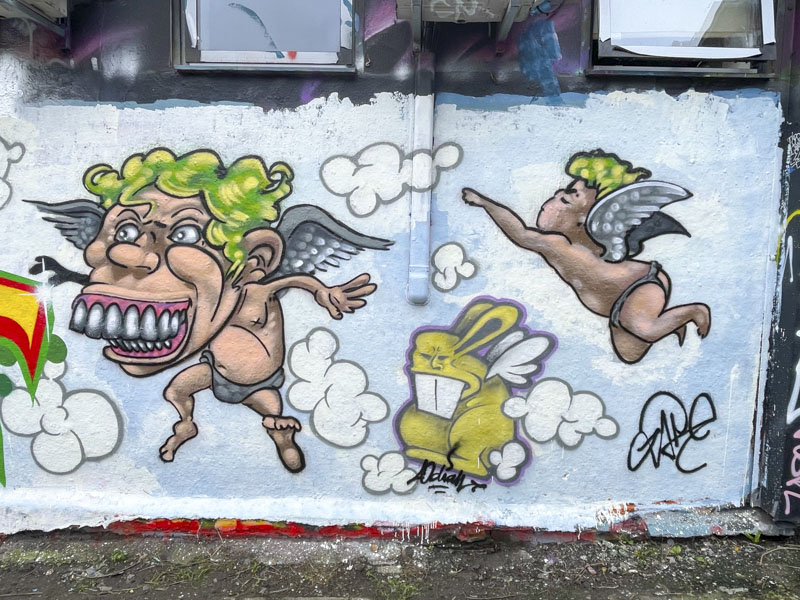
Kool Hand, Werm, Zake and Hire, Dean Lane, Bristol, October 2026
I’m glad I caught this bright and cheerful collaboration, because it didn’t last very long, indeed nothing much lasts too long on this particular wall in Dean Lane. It is great to see Kool Hand, Werm and Zake teaming up, with a guest appearance from Hire as a bonus.
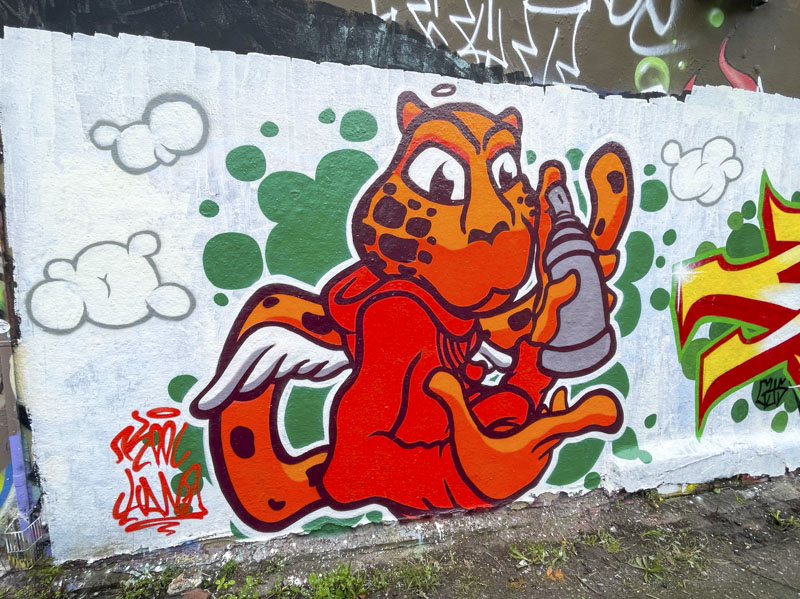
Kool Hand, Dean Lane, Bristol, October 2026
To the left of the collaborative wall, Kool Hand has painted a very crisp, neat and tidy leopard holding a spray can. This fellow has a great tail and even a well painted pair of wings. The cherub theme is central to this collaboration.
Werm, Dean Lane, Bristol, October 2026
Next up is a superb piece of symmetrical writing by werm, although the colours are not quite symmetrical, with two different shades of red used in the drop shadow. a green spotty background decorates the margins, and the white buffed wall helps all the components of the collaboration stand out.
Zake and Hire, Dean Lane, Bristol, October 2026
The cherubim theme comes into full force with a grotesque cherub on the left, and a rather more conventional one on the right. Both are floating in ther heavenly scene, and are joined by a signature rabbit, also with wings, by Hire. An uplifting and fun collaboration.
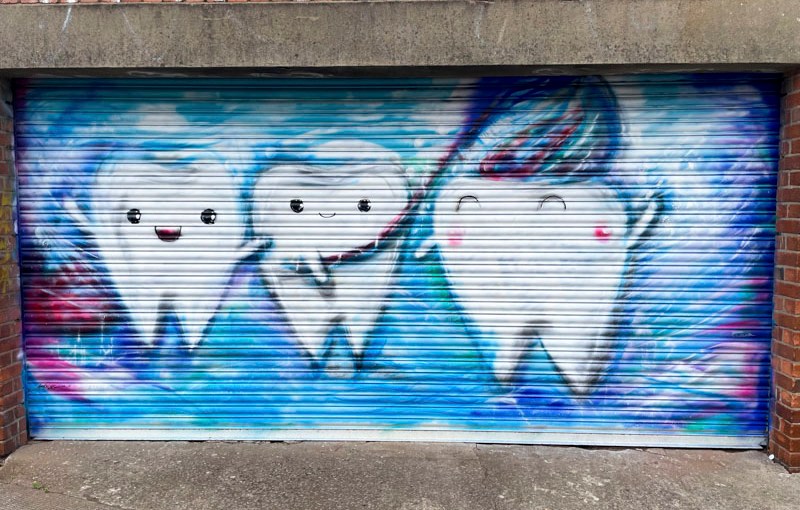
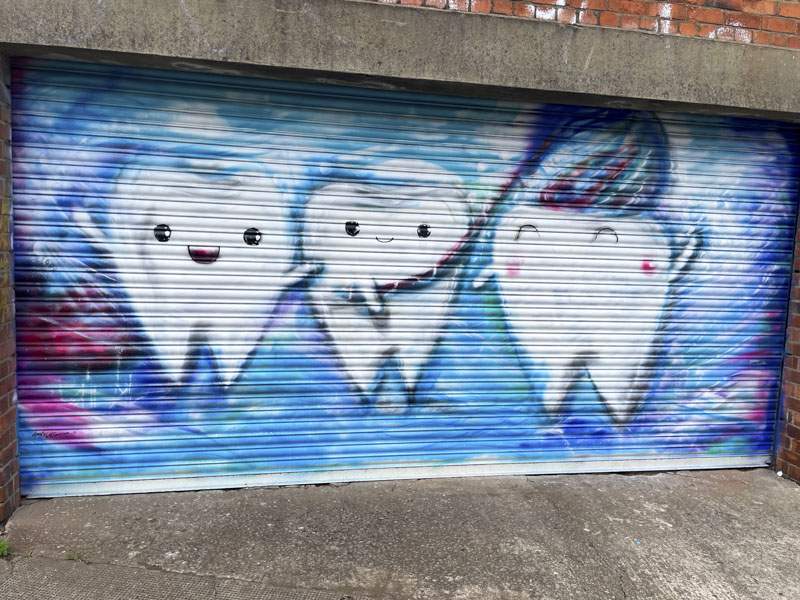
It has been quite a while since I last saw anything painted by Annika Pixie. I am so pleased that the Bristol Mural Collective managed to encourage her to join in with their Lucky Lane paint jam back in September.
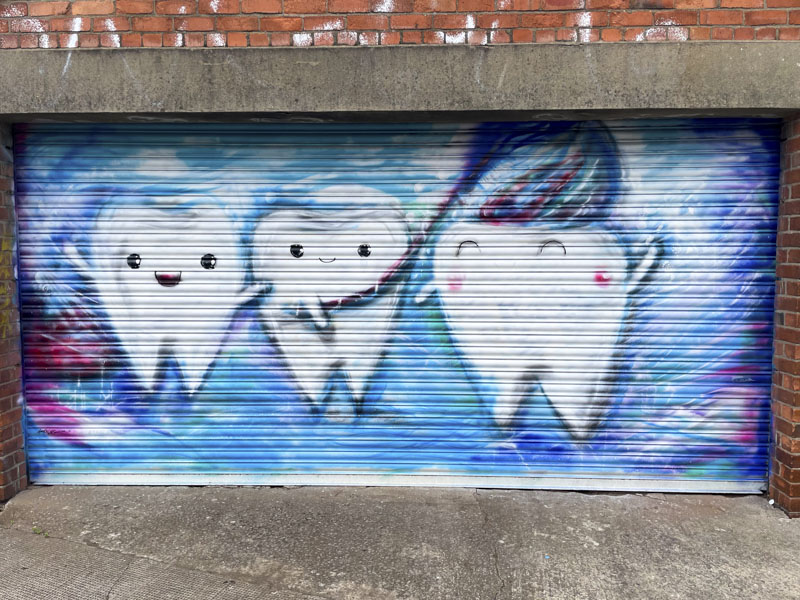
Annika Pixie, Lucky Lane, Bristol, October 2026
Annika Pixie is known for her ephemeral, ghostly pieces, which are deliberately myterious. I have to say that I can only see teeth in this piece, although the little chracters might be some kind of iconic thing that I am unaware of. Although the colours and shades all look a bit random, I’m sure everything in this piece has a purpose in the telling of a story. Great to see Annika back.
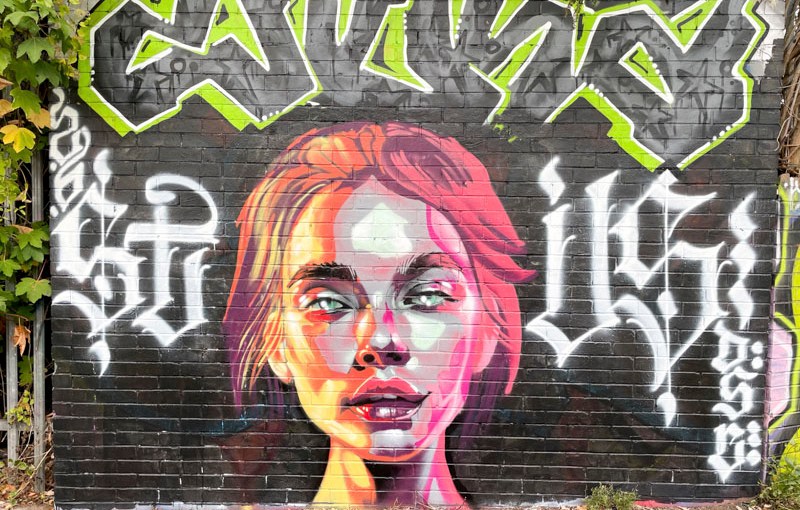
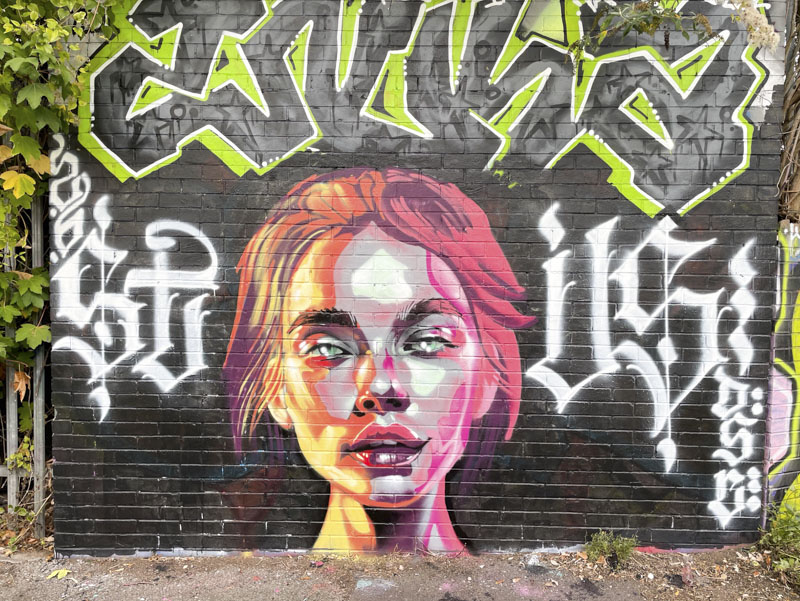
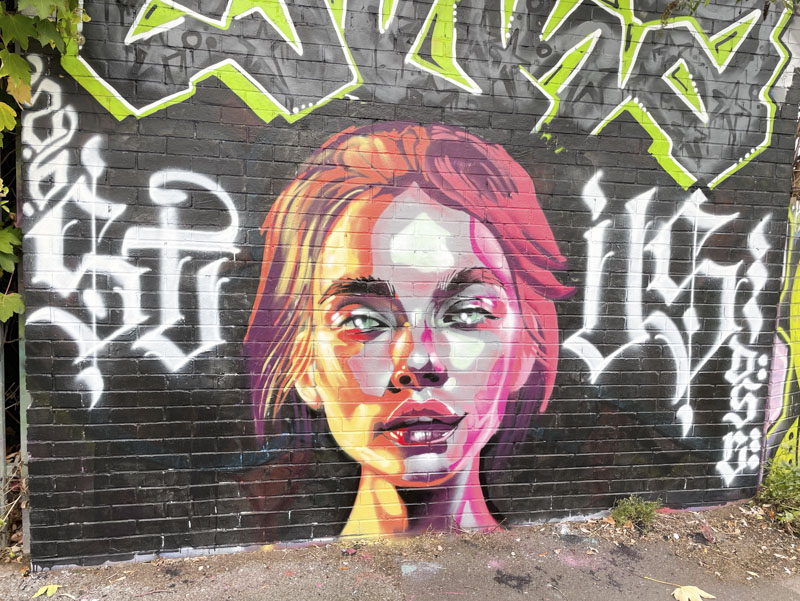
This spot is often occupied by 3Dom until it gets bombed. However, Stivs, who is on fire right now, has painted this outstanding portrait piece, worthy of the spot. The combination piece has the calligraffiti letters ST and (I)VS either side of the portrait.
Stivs, Peel Street Green, Bristol, October 2026
The balance of light and shade used to provide depth and profile to the subject’s face is less subtle than in some of his portraits, but the quite brutal application of colours is in fact incredibly effective. I absolutely love this piece – what an amazing piece of free art for the local community.
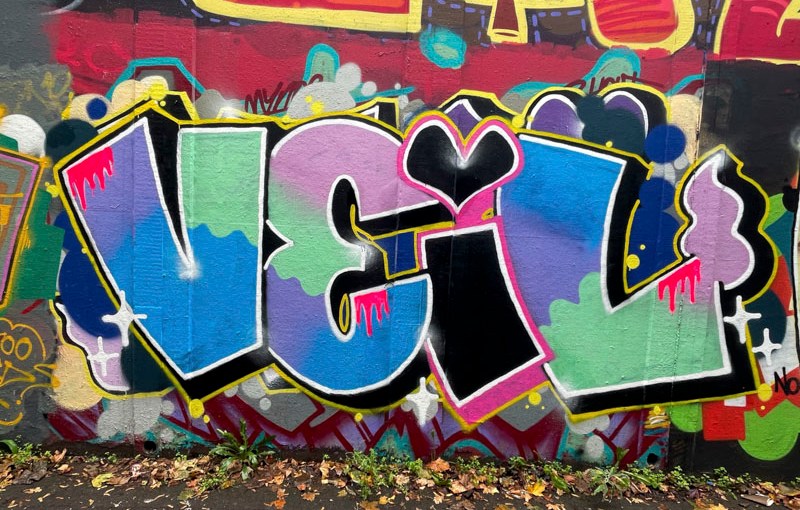
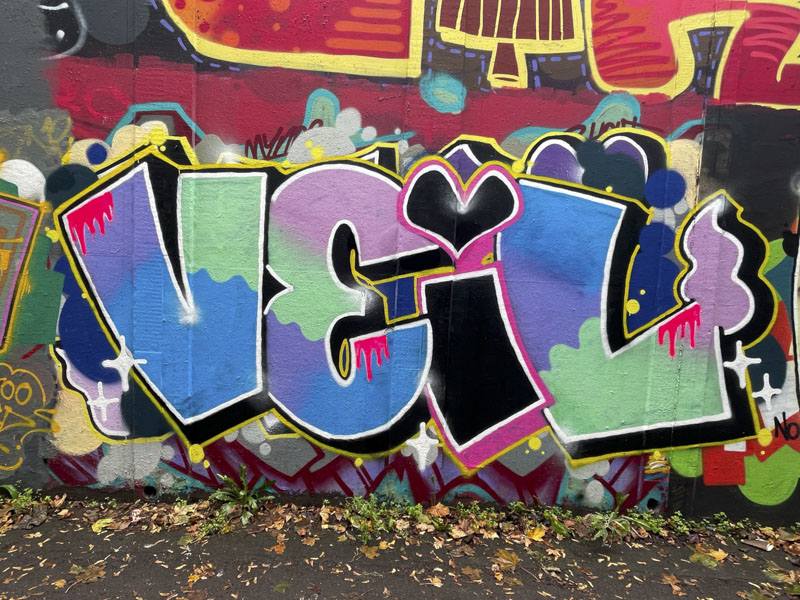
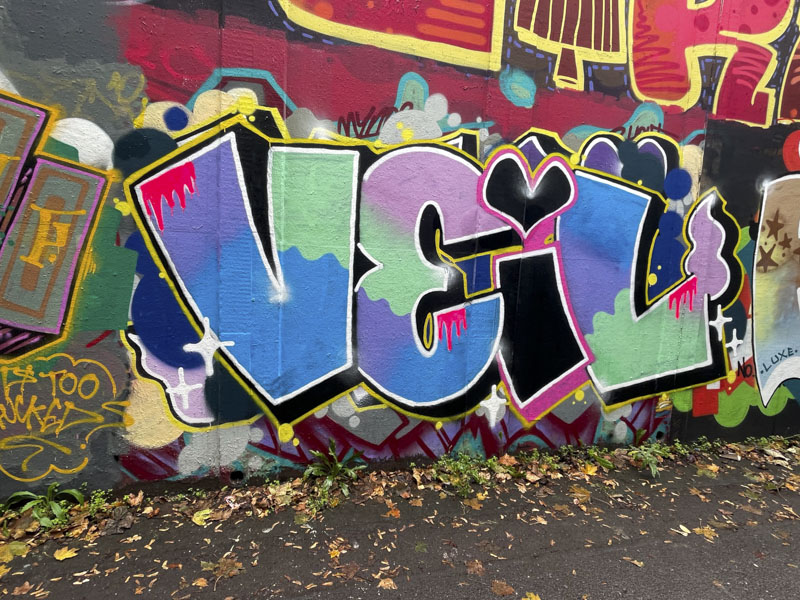
A couple of quick ones today – very busy. I always enjoy finding pieces by Desi, there is something very comforting about her drubeat rhythm of producing her work. This is a new one from the north side of M32 roundabout.
Desi, M32 roundabout, Bristol, October 2026
Desi has spelled out her alternative letters ‘VEIL’ in this tidy piece. Her choice of colours contrasts significantly with the graffiti beneath it, allowing her work to stand out without the need for buffing the wall first. A neat and tidy, happy piece from Desi.