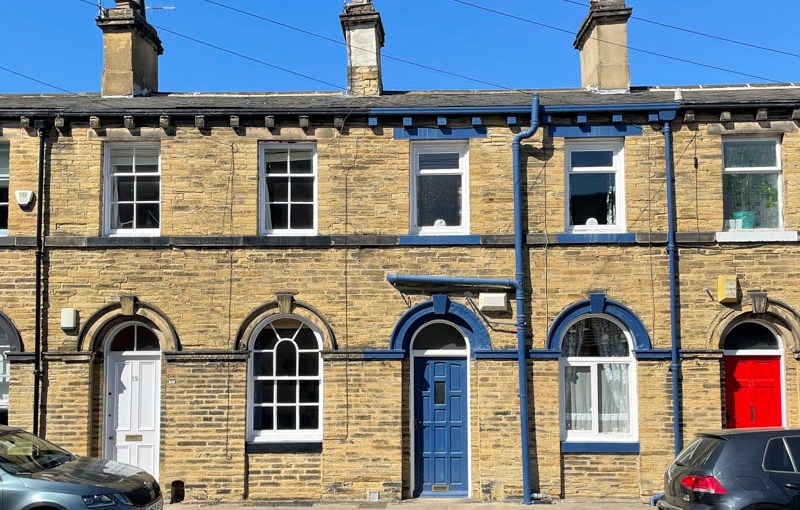
Doors 368 – Doors of Saltaire, Part III – May 2025
So to the last of three posts from a very happy day in Saltaire in May last year. This selection contains residential doors and buildings that show a great insight into organised social hierarchical housing. I have mentioned in previous posts that Saltaire village was built from scratch by the Salt family, the local textile mill owners who dominated local society with their employment of workers and their immense wealth. I used AI to provide a couple of paragraphs about the architecture of the residences in the village:
When Sir Titus Salt began building Saltaire in 1851, he was not simply providing homes for his workers but creating an entire model community. Salts Mill opened in 1853, and house building continued through the 1850s and 1860s, with the village largely complete by 1871. Designed by Lockwood and Mawson, the houses varied in size and character according to the social position of their occupants. Ordinary workers lived in the long, simple terraces, while overseers and managers occupied larger houses, often with gardens. At the top of the hierarchy were the grandest homes, including larger semi-detached properties with more generous plots.
That hierarchy can still be read in the architecture, particularly in the doors. The workers’ houses, many dating from the 1850s, generally have simple, restrained entrances, while the larger and more prestigious houses have wider frontages and more elaborate doorways, with arched openings, stone surrounds and decorative detailing. The doorway was therefore more than a means of getting inside: it formed part of a visual language of status. Walking through Saltaire today, the changing scale and decoration of its doors offer a surprisingly clear glimpse of the social structure of Titus Salt’s Victorian community.
And now the doors:
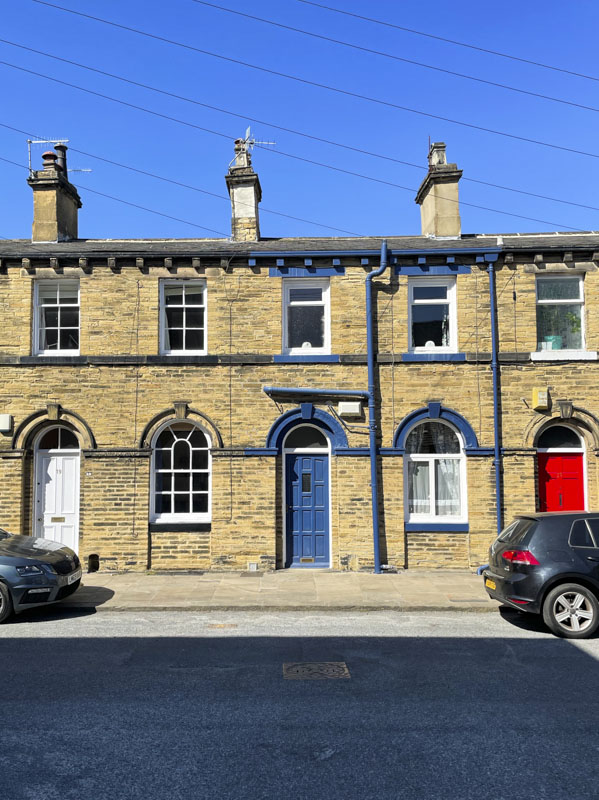
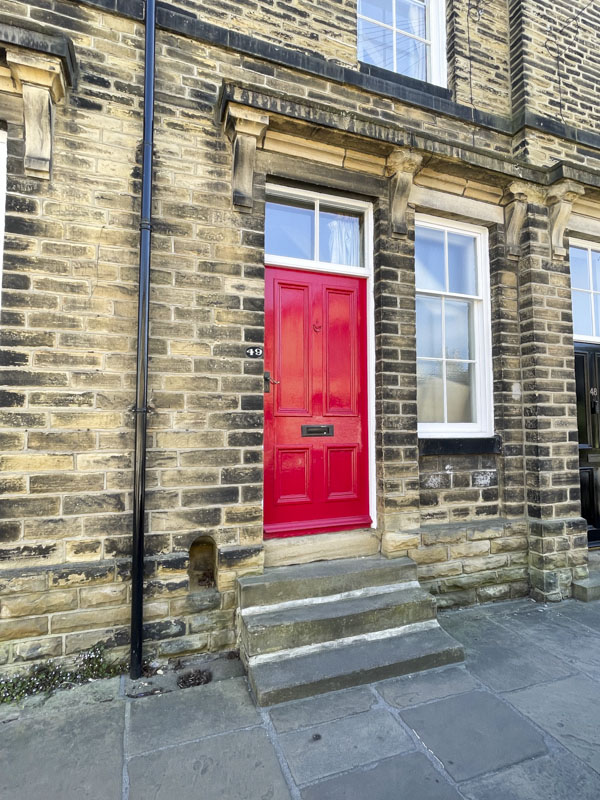
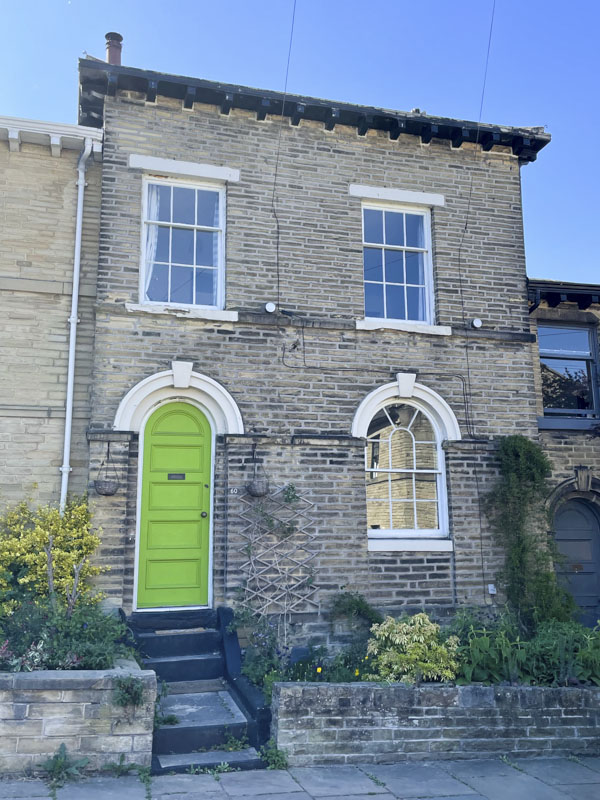
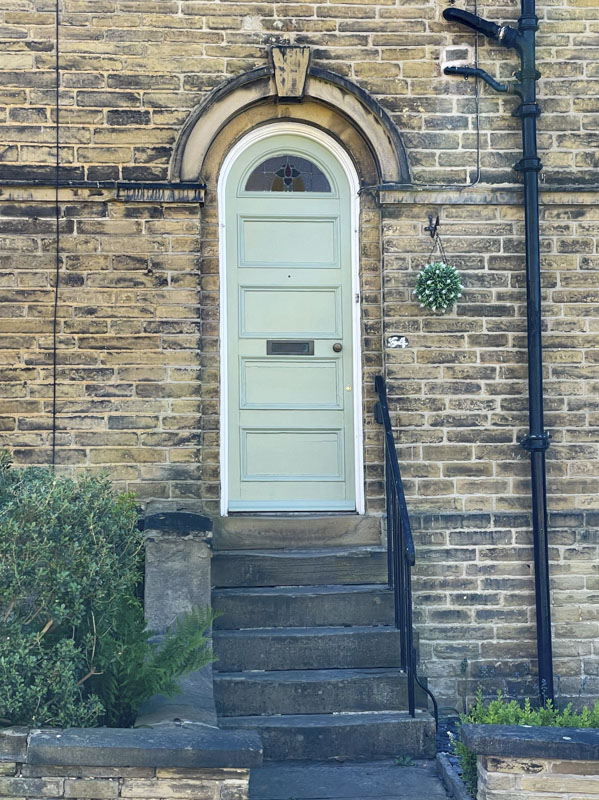
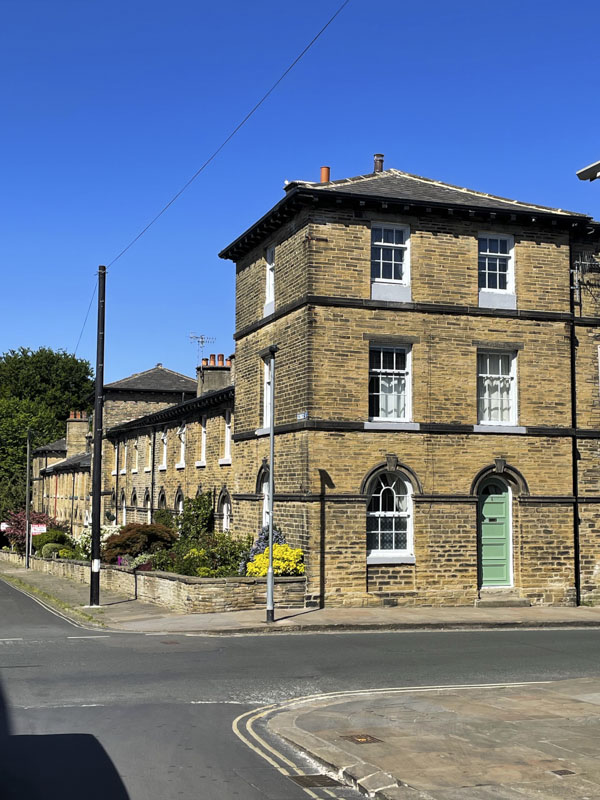
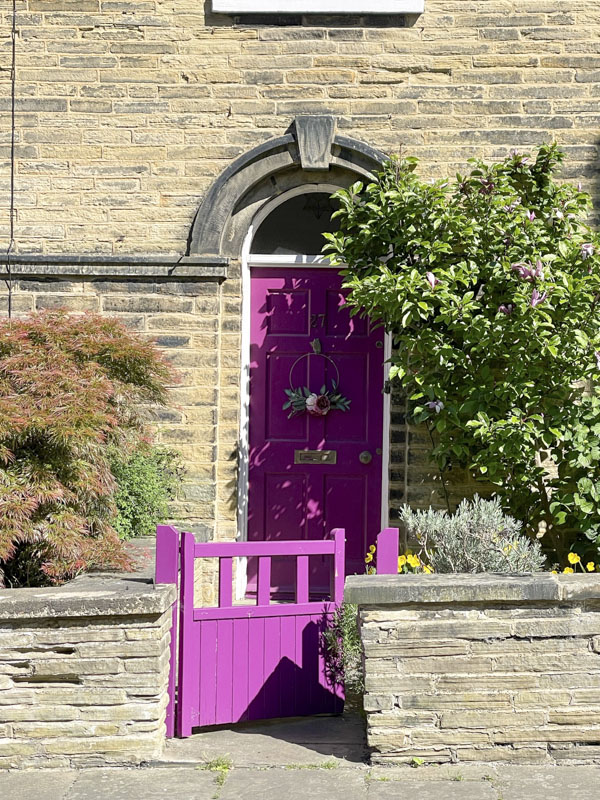
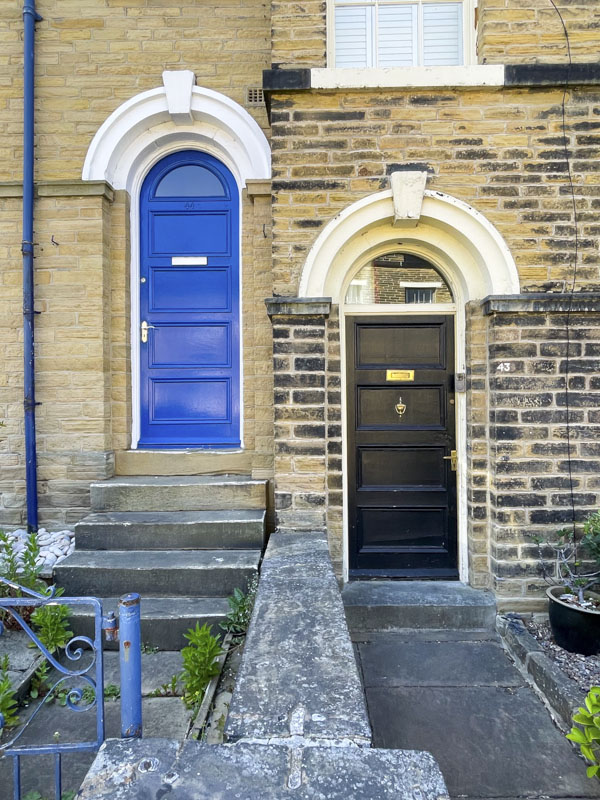
It would seem that the Salt family had a grip on their workers, and while providing housing and amenities and facilities in the village, one could never realistically leave the grip of the mill, and workers were ‘owned’ for their lifetime. The model village was declared a UNESCO World Heritage Site because of this social structure centred around the mill and its owners.
If you have made it this far, you probably like doors, and you really ought to take a look at the No Facilities blog by Dan Anton who has taken over the hosting of Thursday Doors from Norm 2.0 blog. Links to more doorscursions can be found in the comments section of Dan Anton’s weekly Thursday Doors post and his Sunday recap.


These are fantastic doors, right up my street!
LikeLiked by 1 person
Thank you
LikeLiked by 1 person
Colourful and classic!
LikeLiked by 1 person
Agreed
LikeLiked by 1 person
Beautiful. I love the way some of the stairs are worn in the middle, after years of use. The doors are beautiful. Truly enjoyed this.
LikeLiked by 1 person
Thank you. I love worn steps too, they tell their own story.
LikeLike
Excellent and enjoyable gallery, Stephen. The weather looked great in your images. Love the feature photo with the blue, white, and red door. I love the homeowner’s attention to detail in the blue door section. In that, in the upper story, the roof edge is also painted in the same blue. The pink door is super stylish, my favourite.
LikeLiked by 1 person
I was spoiled for choice really.
LikeLiked by 1 person
I love brick buildings, Steve and the colorful doors add so much to the overall appeal. It seemed odd to have the elevated section next to a ground level section, but I guess there was a reason. In any case, I like both.
LikeLiked by 1 person
Can you believe where I’ve been today? Only briefly because we were mostly in Bingley, 10 minutes down the road xx
LikeLiked by 1 person
That uis amazing. My daughter is at Leeds University, and I have family in Leeds, but I haven’t really been far beyond to Bradford and the surrounding area. Saltaire is a gem.
LikeLiked by 1 person
Lovely, colorful doors with layered histories. I look forward to reading your other posts surrounding the Saltaire community.
LikeLiked by 1 person
Thank you. My Saltaire doors are over now, but I have so many more in my archive, the challenge for me is where to choose next.
LikeLiked by 2 people